



Partners


Specializing Master ParTTEc
Empowering the Next Generation of Tunisian Young Faculty Members
The Specializing Master is organized as part of the project ParTTEc “Territorial Partnerships for the Ecological Transition in Tunisia: Co-designing Person-Centred Processes and Practices”
Ref. AID 013248 – CUP D53C25001490005
The overall objective of this Specializing Master’s program is to strengthen Tunisian universities by enhancing the professional development of academic staff and training a new generation of qualified researchers and junior lecturers. The initiative reflects the growing strategic importance of Tunisia and Africa for the academic world and Italy, in line with the priorities of the Italian Ministry of University and Research, the Mattei Plan, and Italy’s G7 presidency. Through intensive training in science, technology, and innovation, the program promotes sustainable academic partnerships and equips young Tunisian scholars with practical skills applicable to ecological transition research, thereby improving scientific output in universities, research centers, and technology parks. The program is fully aligned with Tunisia’s National Ecological Transition Strategy (SNTE), particularly Axis 5, which promotes environmental protection, scientific knowledge, human resource development, sustainable development, and climate change action.
Program
Objectives
The specific objective of this Specializing Master program is threefold
Objectives
To increase knowledge
Of the global challenges of sustainable development and clarify their implications for Tunisia
Objectives
To provide appropriate tools
Provide appropriate tools enabling participants to pursue research and training activities in this field, enabling them to transfer knowledge to home universities
Objectives
To strengthen technical skills
Aimed at the use of open-source analysis and modeling tools for the integrated management of environmental resources
The Specializing Master has been designed as an Executive program for young academic talents that wants to improve their research and didactic competencies: open to junior lecturers and researchers. Weekly workload is designed to allow working students to continue their other research and teaching commitments. The scholarship covers the Specializing Master fee for 30 eligible candidates from Tunisian Universities, Research Centers, Tecnoparks and Public Institutions.
The local involved Tunisian Institutional Stakeholders will support the Scientific Committee in selecting a group of high qualified faculty members who will be trained in specific skills, competencies and tools. If this knowledge is effectively instilled in a generation of young talent, it can be used to support effective, fair, and well-reasoned policy decisions.
Program
Structure
The Specializing Master program consists of
2
general
modules
4
specialized
modules
- Introductory Module: Sustainable Development and Ecological Transition in Tunisia (3 ECTS)
- Specialized Module on Sustainable and Just Energy Transition (10 ECTS)
- Specialized Module on Industry 4.0 and Sustainable Manufacturing (10 ECTS)
- Specialized Module on Industry 4.0 and Sustainable Manufacturing (10 ECTS)
- Specialized Module on Agri-food Systems: Management and Innovation for Sustainability (10 ECTS)
- Skills Module: Project/Research Management and Innovative Teaching (4 ECTS)
Final project work (13 ECTS)
The Specializing Master includes the assignment of a final group project work for which students will apply the knowledge acquired in the modules and either write a research proposal on a topic of interest to their home university or design a program and syllabus (including innovative teaching methods) for a new course.
Key information

Period & Classes sessions
The program follows a blended format, combining in-person classes in Tunis and Milan with online sessions.

Training Format
Three days of classes per week. Weekly workload is designed to allow working students to continue their job commitments: blended program, online classes & MOOCs.

Language
English (B2 level required)

Target
Junior lecturers or researchers from Tunisian Universities, Research Centers, Tecnoparks and Public Institutions, holding a Bachelor’s degree or Master’s Degree

Awarded title
First Level Specializing Master in Science, Technology and Sustainable innovation for Ecological Transition (60 ECTS) 75% attendance presence is mandatory

Scholarship
30 scholarships available for candidates from Tunisian Universities, Research Centers, Tecnoparks and Public Institutions
Timing
Application opening
Deadline
Selection phase
Ranking list
Eligibility for admission
The Specializing Master program has been designed for young academic talents: 30 places available for junior lecturers or researchers from Tunisian Universities, Research Centers, Tecnoparks and Public Institutions holding a Bachelor’s degree or Master’s degree.
in disciplines connected to the topics of the Specializing Master:
- copy of the degree in the original language and its translation into Italian/English/French or Spanish
- copy of the transcripts with the list of exams in the original language and their translation into Italian/English/French or Spanish or Diploma Supplement
Upload a copy of your passport, which must be valid or within six months of its expiration date
in English with personal contact (address, email, mobile-phone number, max 2 pages);
in English and prepared on purpose, highlighting the reasons for joining the training program, max 1 page);
prepared on purpose, in English and prepared on purpose, issued on headed paper and signed preferably by an institutional representative (Head of Unit or Department; Supervisor) of the home Institution/University (max 1 page).
Proficiency in English (B2 level) is mandatory: the full learning program will be held in English and the knowledge of the language will be tested during the selection interview. If you have a Language Certification you can upload it in your application as an additional document.

Please Note
Incomplete applications will be considered ineligible
Application & admission steps
Admission steps guidelines
(578 KB)
Call for application (Rectoral Decree)
(380 KB)
To apply for the Specializing Master, please complete the following form.
Specializing Master ParTTEc
The Scientific Committee will ensure a selection process based on equal opportunity without prejudice, regardless of gender, race, religion, age, pregnancy or any disability. More information on the selection process are available in the above downloadable guidelines.
The output of the selection process will be a ranking list based on the evaluation of the above mentioned criteria: from 1 point (lowest) to 5 points (highest). The maximum overall grade will be 30 points. The minimum grade will be 18. The ranking list will be sent by email at the end of the selection process (January 2027). A reserve list will be included in case of withdrawal of one or more of the selected applicants
Step 1
Applications documents are screened to ensure they meet the Call for application requirements. Eligible applicants access to Step 2
Step 2
The Scientific Committee will invite up to 45 eligible candidates for a video-interview. The candidate will need to demonstrate commitment to evaluation criteria
Step 3
The final ranking list will be emailed at the end of the selection process (January 2027).
Evaluation Criteria:
- Educational and professional career evaluated from the CV, and the Academic transcripts (up to 10 points).
During the interview, the candidate will need to demonstrate:
- Capacity to clearly and accurately communicate in English;
- Knowledge of the National Strategy for the Ecological Transition in Tunisia;
- Communication, team-working skills and willingness to contribute to disseminate the knowledge to peer-professionals or younger students;
- Multidisciplinary and cross-sectorial approach;
The output of the selection process will be a ranking list based on the evaluation of the above mentioned criteria: from 1 point (lowest) to 5 points (highest). The maximum overall grade will be 30 points. The minimum grade will be 18. The ranking list will be sent by email at the end of the selection process (January 2027). A reserve list will be included in case of withdrawal of one or more of the selected applicants
Specializing Master ParTTEc
Fee exemption and Financial support
The administrative costs covered by the program: tuition fee, duty stamp, consumable and learning materials, travel and medical insurance, accommodation and meals during the on campus sessions.
Through a credit or prepaid card that allows international bank transfers (e.g. Revolut, Wise…) the student will get reimbursement for specific expenses related to the training program. The credit or prepaid card must be owned by each applicant by the time of the enrollment.
Scientific Committee
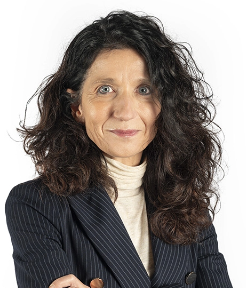
Director
Emanuela Colombo
Politecnico di Milano
Department of Energy
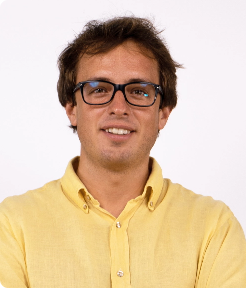
Vice Director
Francesco Tonini
Politecnico di Milano
Department of Energy
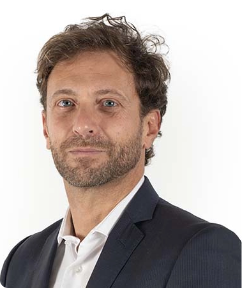
Politecnico di Milano
Riccardo Mereu
Department of Energy
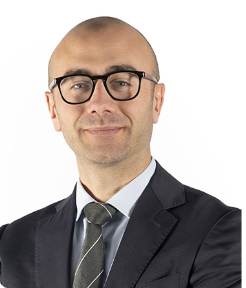
Politecnico di Milano
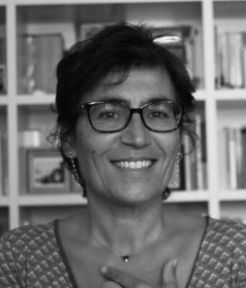
Matteo Vincenzo Rocco
Department of Energy
Politecnico di Milano
Petra S. Mezzetti
Department of Energy

Politecnico di Milano
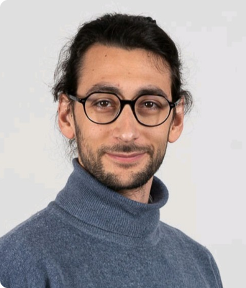
Beatrice Cantoni
Department of Civil and Environmental Engineering
Politecnico di Milano
Niso Randellini
Department of Management, Economics, and Industrial Engineering

Politecnico di Milano
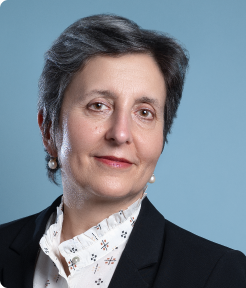
Manuela Antonelli
Department of Civil and Environmental Engineering
Politecnico di Milano
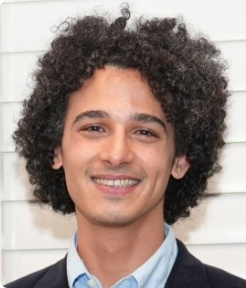
Paola Maria Garrone
Department of Management, Economics, and Industrial Engineering
Politecnico di Milano
A. H. Mohamed Abdelhalim Abdalla
Department of Mechanical Engineering
Politecnico di Milano
Marcello Colledani
Department of Mechanical Engineering
